
Knotweed Removal for Property Developers
Get in touchAt Top Japanese Knotweed Removal, we provide specialised knotweed removal services for property developers. Our team expertly manages Japanese knotweed, using proven eradication methods to ensure your development projects remain on schedule.
By targeting this invasive plant, we help protect the integrity of structures and land, preventing potential damage and legal complications. We proudly serve property developers across and surrounding areas with efficient and thorough services.
Contact us today to discuss your specific requirements and receive a tailored solution.
What Is Knotweed Removal for Property Developers?
Knotweed removal for property developers involves systematically eliminating Japanese knotweed to prevent its spread and root damage. At Top Japanese Knotweed Removal, we tailor our methods to the needs of property development projects, ensuring comprehensive eradication.
We use methods like herbicide application with glyphosate, which effectively inhibits growth, and physical excavation for severe infestations where plant roots are deeply established. Our team uses specialist equipment such as excavators and sprayers, ensuring correct removal without disrupting your project timelines.
We provide detailed site surveys to establish the extent of the infestation and plan accordingly.
Our services protect site infrastructures, promote project continuity, and comply with all relevant environmental regulations, including the Wildlife and Countryside Act 1981. By employing techniques such as herbicide treatment and excavation depending on the site conditions, we provide flexible solutions for your development needs.
Contact us today to ensure your development proceeds smoothly and knotweed-free.
What Types of Knotweed Removal Are Available?
Our knotweed removal services offer several effective methods tailored to different development scenarios. We understand the unique challenges posed by Japanese Knotweed to property developers, and our strategies are designed to address these effectively.
Herbicide Treatment: A cost-effective solution using Environment Agency-approved chemicals to manage knotweed growth over several seasons. This method is suitable for sites not under immediate development pressure and ensures compliance with environmental regulations.
Excavation: Physical removal of knotweed, which is vital for construction sites where immediate clearance is necessary. This method includes the use of specialised equipment like mini excavators and is often paired with on-site burial or off-site disposal following waste management protocols.
Integrated Management Plans: Customised plans combining different methods, such as root barrier installation and scheduled herbicide applications, for long-term control across complex sites where varied terrain may influence knotweed behaviour.
Monitoring and Maintenance: Ongoing checks with detailed site surveys to ensure knotweed does not return post-treatment. This includes bi-annual visits to measure regrowth and adapt strategies as needed.
Our team is ready to support your development with effective strategies. Contact us to discuss the best approach for your project.
When Is Knotweed Removal Needed?
Knotweed removal is often required as soon as Japanese knotweed is detected on a development site. The invasive nature of knotweed means its roots can grow up to three metres deep and extend up to seven metres laterally, potentially compromising foundations, drainage systems, and concrete structures.
Early intervention prevents costly repairs and ensures structural safety. Timing is also crucial when preparing a site for construction; removal operations can take several months, especially if chemical control methods are used.
Developers must consider knotweed management to ensure compliance with the Wildlife and Countryside Act 1981, which prohibits the planting or causing the spread of this invasive species. Additionally, failure to address knotweed issues can affect property transactions, as it may reduce property value and deter lending institutions.
Effective knotweed management helps meet both legal and environmental responsibilities, securing the viability and profitability of development projects.
How Does Knotweed Removal Work?
Our knotweed removal process is designed to efficiently eliminate this invasive plant while minimising impact on your development timeline. We start with a Site Survey, where our specialists assess the extent of the knotweed infestation through detailed mapping and use of specific tools like radiodetection equipment.
This helps us identify any underground rhizome networks.
Next, we devise a Treatment Plan, choosing between herbicide applications, typically using glyphosate, or physical removal through precise excavation. The method depends on the infestation's severity and proximity to construction areas, with herbicide treatments often scheduled over several growing seasons for maximum effectiveness.
During Implementation, trained technicians carry out the removal, ensuring adherence to industry standards such as the PCA guidelines to ensure environmental safety and structural stability.
Finally, a Follow-Up involves regular monitoring to detect any signs of regrowth. We might employ root barrier membranes if future excavation work is expected nearby.
This follow-up phase ensures comprehensive eradication, supporting developers in maintaining knotweed-free properties.
Contact us to discuss tailored solutions for your site at .
How Long Does Knotweed Removal Take?
Knotweed removal typically requires a few weeks to several months to ensure effective eradication. The timeline varies depending on several factors, such as the infestation size, selected treatment method, and site conditions.
For example, herbicide treatment can take an entire growing season, as it involves multiple applications of glyphosate-based products to penetrate the plant's deep root system. In contrast, excavation offers immediate removal by physically digging out the rhizomes, although follow-up visits are vital to address any remaining fragments.
For property developers, a combined approach may be beneficial: using weed barriers and root barriers along with herbicides can prevent regrowth and minimise future maintenance. Continuous monitoring, in alignment with PCA (Property Care Association) guidelines, is essential for lasting results.
Contact us to discuss the specifics of your development project and receive a detailed timeline.
Who Needs Knotweed Removal?
Property developers and the surrounding areas benefit from knotweed removal services. Japanese knotweed can severely disrupt construction projects, damage infrastructure, and reduce property value.
The invasive nature of Japanese knotweed can breach concrete and tarmac, causing structural instability and necessitating costly repairs.
Developers aiming to maintain project timelines and site integrity require professional removal services to manage this invasive species effectively. We employ techniques such as excavation and on-site burial, compliant with Environment Agency standards, to eradicate the plant.
The presence of knotweed can also complicate mortgage approvals, impacting the viability of future sales.
Early intervention with a strategic management plan is crucial for preventing growth recurrence. We collaborate with ecological experts to ensure long-term success, offering consultative support throughout the project lifecycle.
Investing in knotweed removal protects property value and helps secure the financial confidence of stakeholders. Call us to discuss a removal strategy tailored to your development needs.
How Much Does Knotweed Removal Cost?
Knotweed removal costs around £2,000 to £5,000 per project, depending on the infestation size and chosen treatment plan. Herbicide treatments are generally more economical, typically requiring multiple applications over three to four growing seasons to ensure effectiveness.
In contrast, excavation is more costly due to the need for excavators and skilled labour, often necessary when the root system is extensive. Site accessibility, including challenges such as narrow entryways or the presence of underground utilities, can also affect costs.
Additionally, project scale and follow-up requirements, such as site monitoring and ongoing maintenance post-removal, contribute to the overall expense. Proper removal is vital to prevent legal liabilities under the Wildlife and Countryside Act 1981.
For an accurate quote, please contact us to arrange a site survey.
What Are the Benefits of Knotweed Removal?
Knotweed removal offers significant advantages for property developers, ensuring a smooth project execution and safeguarding investment:
Site Integrity: Prevents structural damage to foundations, utilities, and pavements. By using methods like excavation and root barrier installation, we mitigate the risk of knotweed re-growth that can destabilise structures.
Property Value: Protects or enhances the property’s market value. Surveys often reveal knotweed, which can lead to devaluation; removing it assures potential buyers and financiers of the site's prime condition.
Legal Compliance: Meets legal standards such as the Wildlife and Countryside Act 1981, avoiding potential fines. Compliance with these regulations underlines the responsible management of the development site.
Project Continuity: Keeps development timelines on track by reducing delays. Knotweed can extend project times but applying herbicidal treatments over the course of two to three growing seasons ensures it doesn't impede construction schedules.
By addressing these factors, property developers can achieve their project goals efficiently. Contact us to discuss how we can assist with your site needs.
What Regulations Apply to Knotweed Removal?
Knotweed removal is regulated under the Wildlife and Countryside Act 1981 in the UK, which makes it illegal to plant or allow knotweed to spread in the wild. Developers must also comply with the Environmental Protection Act 1990 when managing and disposing of knotweed waste, as it is classified as "controlled waste."
Disposal requires a waste carrier's licence and an appropriate landfill authorised to accept such material. Our team follows all these regulations meticulously to prevent legal issues and project delays on your site.
Additionally, developers are encouraged to consult the Construction Code of Practice for the Sustainable Use of Soils on Construction Sites to ensure that knotweed does not affect soil reuse plans. By complying with these standards, we help you minimise disruption and delay, maintaining smooth operations.
Contact us for compliance-focused knotweed management solutions.
Why Choose Top Japanese Knotweed Removal for Knotweed Removal?
Choosing Top Japanese Knotweed Removal means partnering with experts committed to effective and efficient solutions. Our team uses a combination of herbicide spraying, excavation, and root barrier installation, all adapted to comply with the Wildlife and Countryside Act 1981.
These industry-approved methods and equipment are tailored to property development needs, ensuring minimal disruption to your construction schedule.
We perform site assessment, soil analysis, and knotweed mapping to create a detailed plan that aligns with your project's timelines and adheres to local planning regulations. Our treatment plans are designed to dovetail with your project's timelines and regulations, integrating smoothly with the broader construction process to prevent costly delays.
By working closely with surveyors, architects, and site managers, we ensure the elimination of knotweed, protecting your investment and property value.
Get in touch today to safeguard your development from knotweed complications.
Knotweed Removal for Property Developers: Frequently Asked Questions
How can I identify Japanese knotweed on my site?
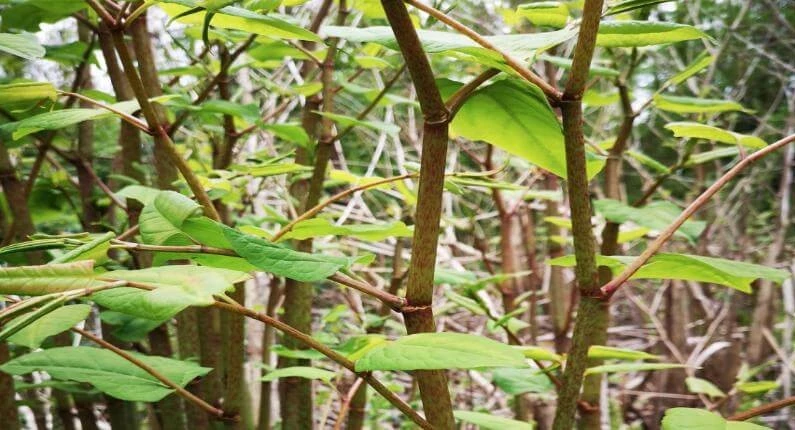
Japanese knotweed can be identified by its heart-shaped leaves and purple-tinged stems, often found in clumps. If you suspect its presence, contact us for a professional assessment.
Can Japanese knotweed reduce my property's value?
Yes, Japanese knotweed can significantly reduce property value and make it difficult to obtain building permits or loans. Removal is essential to maintaining value.
Is knotweed removal expensive?
Knotweed removal typically costs £2,000 to £5,000, depending on infestation size and method. Contact us for a precise quote based on your specific circumstances.
How long does a herbicide treatment for knotweed take?
Herbicide treatments usually span one growing season but require consistent follow-up to ensure efficacy. Contact us for more details tailored to your project.
Will knotweed return after treatment?
With proper management and follow-up, knotweed regrowth is minimal. Our ongoing maintenance plans help prevent its return, ensuring your site remains clear.
Get a Free Quote for Knotweed Removal for Property Developers
Ensure your property development proceeds smoothly with our expert knotweed removal services. Get a Free Quote to discuss your specific needs and secure your site today.
Related Knotweed Removal for Property Developers Services
Knotweed removal for property developers can incorporate specialist invasive plant control into development planning. A Japanese knotweed survey can establish the extent of the issue, while knotweed excavation can provide a physical removal option where appropriate.
For development proposals requiring structured remediation, a Japanese knotweed management plan can define the proposed control measures. A RICS knotweed report may also be relevant when property condition needs to be formally documented.